The Ultimate In-Depth Guide to Luggage:Luggage Size, Structural Materials-image
- Author
- Admin
- Published
- Read Time
- 29 min read
- Likes
- 156
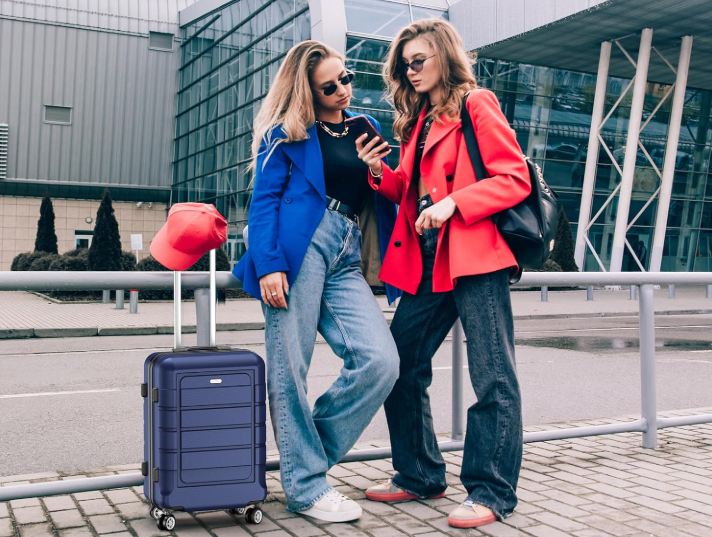
As an essential travel item, choosing a reliable suitcase is crucial for a smooth travel experience. This guide focuses on the core issu...
Travel has become an indispensable part of modern life, whether for business trips, family vacations, studying abroad, or casual weekend getaways. Among all travel essentials, a reliable suitcase is one of the most crucial investments you will ever make. Today’s luggage market is saturated with options—hardside or softside, 20-inch or 28-inch, PC or ABS, zipper or aluminum frame, budget-friendly or high-end. With such a wide range of choices, it’s easy to feel confused, overwhelmed, or even end up purchasing a suitcase that cracks, breaks, or fails you mid-trip.
This comprehensive in-depth guide is designed to answer your top 10 most commonly asked questions about luggage size, carry-on rules, and basic structural materials. We will explain professional concepts in simple, easy-to-understand language, compare real-world performance, and provide practical advice tailored to different types of travelers: business users, students, families, frequent flyers, and budget shoppers. By the end of this guide, you will have a clear understanding of how to choose the right suitcase size, comply with carry-on regulations, and select durable basic materials.
Should I choose a 20-inch, 24-inch, or 28-inch suitcase? Which size is the most practical?
Choosing the right suitcase size depends primarily on the length of your trip, your usage scenario, and your identity as a traveler. For short trips (1 to 3 days)—such as weekend getaways, one-day business meetings, or short campus trips— a 20-inch suitcase is the most suitable choice. It is compact, lightweight, and can be taken on board the plane without checking, saving you the time of waiting for checked luggage at the destination. This size is especially ideal for business professionals who value efficiency, students going on short field trips, and solo travelers who prefer to travel light. Medium-Length Trips (4-7 Days): The Most Versatile Choice For medium-length trips (4 to 7 days)—including solo vacations, business trips that require multiple sets of clothing, or student internships in nearby cities—a 24-inch suitcase strikes the perfect balance between capacity and portability. It is large enough to hold 5-7 sets of daily clothing, a pair of extra shoes, and small personal items, while still being easy to carry when checking in or moving through airports. This size is the most versatile for most travelers, whether you’re a student, a young professional, or a casual vacationer. Long Trips (7+ Days): Prioritize Capacity For long trips (more than 7 days)—such as family vacations, winter trips (which require bulkier clothing like down jackets), international travel, or shopping-focused trips—a 28-inch large checked suitcase is essential. Its ample capacity can easily accommodate the belongings of 2-3 family members, multiple sets of seasonal clothing, souvenirs, and even bulky items like laptops or baby supplies (for family travelers). This size is particularly suitable for families, students studying abroad (who may need to carry daily necessities for a long time), and travelers who love shopping. Recommended Size Combinations for Daily Use For daily use, it is recommended to prepare a combination of sizes: a 20-inch for short trips and boarding, and a 28-inch for long trips and checking, which can basically cover all travel needs of most people. Budget-conscious travelers or those with limited storage space can also prioritize a 24-inch suitcase as their all-purpose option, as it can handle most trips except extremely long or large-scale ones.
Can a 20-inch carry-on suitcase be taken on all planes?
A 20-inch carry-on suitcase can be taken on board most airlines around the world, but it is not absolutely universal—this depends largely on the type of airline, the size of the aircraft, and the specific regulations of different regions. For regular full-service airlines (such as Delta, United, Air China, and British Airways), the size limit for carry-on luggage is usually no more than 115cm in the sum of length, width, and height (commonly 55cm × 40cm × 20cm), with a weight limit of 7 to 10 kilograms. A standard 20-inch suitcase (with built-in wheels and a telescopic handle) basically meets these requirements, making it suitable for most business travelers, students, and solo travelers who take regular flights. Exceptions: Low-Cost Airlines and Small Aircraft However, there are important exceptions to note. Low-cost airlines (such as Ryanair, EasyJet, Spirit Airlines, and Spring Airlines) often have stricter restrictions on carry-on luggage—some even limit the sum of length, width, and height to 100cm or less, and charge additional fees for carry-on luggage that exceeds the size or weight limit. For example, Ryanair’s free carry-on size is only 40cm × 25cm × 20cm, which is smaller than a standard 20-inch suitcase, meaning even a 20-inch bag may need to be checked for an extra fee. In addition, small regional aircraft (often used for short-haul flights between small cities) have limited overhead compartment space, and their carry-on size limits may also be smaller than those of large aircraft. Advice for Specific Travelers For travelers who frequently take low-cost airlines or regional flights, it is recommended to carefully check the airline’s official website for carry-on regulations before traveling, and choose a 20-inch suitcase with a slimmer design or a foldable 20-inch bag to avoid being unable to board or incurring extra fees. For international travelers, it is also necessary to pay attention to the differences in carry-on regulations between different countries—some countries (such as Japan and South Korea) have slightly stricter weight limits for carry-on luggage, even if the size is compliant. In summary, a 20-inch carry-on is generally safe for regular flights, but it is crucial to confirm the airline’s specific regulations, especially if you are traveling with a low-cost airline or a small aircraft.
What is the maximum size limit for carry-on luggage?International Standard for Full-Service Airlines The maximum size limit for carry-on luggage is not uniform globally—it varies by airline, aircraft type, and travel region, but there is a general international standard that most full-service airlines follow. The most common international standard is that the sum of the length, width, and height of the carry-on luggage shall not exceed 115cm (equivalent to approximately 55cm in length, 40cm in width, and 20cm in height). This size is designed to ensure that the luggage can fit into the overhead compartment or under the seat in front of the aircraft, and it is suitable for most large and medium-sized aircraft used for international and domestic long-haul flights. For business travelers who often carry laptops and documents, this size is sufficient to hold a laptop bag inside the carry-on or attach it as a personal item (most airlines allow one carry-on plus one personal item for free).
Key Note: Size Includes Wheels and Handles
It is particularly important to note that this size limit includes the wheels, telescopic handle, and any protruding parts of the suitcase (such as side pockets or handles)—not just the main body of the suitcase. Many travelers make the mistake of only measuring the main body of the suitcase and end up with a bag that exceeds the limit due to external wheels or a thick telescopic handle. For example, a suitcase with a main body of 50cm × 35cm × 18cm may have a total size of 118cm when including wheels and a handle, which exceeds the 115cm limit and may be rejected by the airline. Size Limits for Different Scenarios and Travelers For different types of travelers and scenarios, there are additional considerations. For low-cost airline travelers, as mentioned earlier, the size limit is often stricter—some low-cost airlines set the sum of length, width, and height at 100cm or 105cm, and only allow small carry-on bags for free. For example, EasyJet’s free carry-on size is 56cm × 45cm × 25cm (sum 126cm), but Spirit Airlines’ free size is only 45cm × 35cm × 20cm (sum 100cm). For travelers who take regional flights or small aircraft, the overhead compartment space is limited, so the carry-on size limit may also be smaller (usually around 100-110cm). For students and casual travelers who often carry more personal items (such as books, snacks, or camera equipment), it is recommended to choose a 20-inch suitcase with a built-in laptop compartment and multiple internal pockets, while ensuring that the total size does not exceed the airline’s limit. When purchasing a carry-on suitcase, it is best to choose one clearly marked as “compliant with international carry-on standards” or check the product specifications to confirm the total size (including wheels and handle). If you are unsure about the airline’s regulations, you can always check the official website or contact customer service before traveling to avoid any issues at the airport.
What is the real difference between checked luggage and carry-on luggage?
Difference 1: Usage Environment and Structural Strength
The real difference between checked luggage and carry-on luggage goes far beyond size—it lies in their designed usage environments, structural requirements, functional focuses, and suitability for different travelers and scenarios. Understanding these differences is key to choosing the right luggage for your trip. First, in terms of usage environment and structural strength: Carry-on luggage (mainly 20 inches) is designed to be carried on board the aircraft and placed in the overhead compartment or under the seat, so it does not need to withstand the violent handling of airport baggage handlers. As a result, carry-on luggage emphasizes lightness, flexibility, and portability—its frame and shell are usually thinner (but still durable enough for daily handling), and it focuses on being easy to lift and maneuver. This makes it ideal for business travelers, students, and solo travelers who value efficiency and do not want to wait for checked luggage. Checked luggage (usually 24 inches or larger), on the other hand, must withstand harsh handling during transportation—including being thrown, stacked, squeezed, and exposed to changes in temperature and humidity. Therefore, checked luggage requires a stronger structure: thicker and more impact-resistant shells (such as PC or thickened ABS), more stable wheels (often 360° spinner wheels with reinforced bearings), and more durable frames (aluminum frames are preferred for high-end checked luggage). This sturdiness ensures that the luggage and its contents are protected during long-distance travel or frequent checking.
Difference 2: Functional Focus Second, in terms of functional focus: Carry-on luggage focuses on convenience and accessibility. It often has multiple internal and external pockets, laptop compartments, and quick-access zippers, allowing travelers to easily take out frequently used items (such as passports, boarding passes, laptops, and water bottles) without fully opening the suitcase. This is especially useful for business travelers who need to work on the plane or at the airport, and for students who carry textbooks or electronic devices. Checked luggage, by contrast, focuses on capacity, explosion-proof, and waterproof capabilities. It has a larger main compartment, often with expandable layers, to accommodate more items (such as clothing, souvenirs, and bulky items). High-quality checked luggage also has better sealing (such as aluminum frame closures or waterproof zippers) to prevent water damage or items from falling out during transportation.
Difference 3: Suitability for Different Travelers Third, suitability for different travelers: Carry-on luggage is perfect for short trips (1-3 days), business trips, and travelers who prefer to travel light (such as solo backpackers and students on short trips). It saves time at the airport (no need to check in or pick up luggage) and reduces the risk of lost or damaged luggage. Checked luggage is essential for long trips (7+ days), family travelers (who need to carry belongings for multiple people), students studying abroad (who need to carry long-term daily necessities), and travelers who shop heavily. It provides the necessary capacity to carry all items without overcrowding. Additional Considerations: Weight Limits and Risks Finally, additional considerations: Carry-on luggage has weight limits (usually 7-10kg), so it is not suitable for carrying heavy items (such as books, equipment, or large bottles of liquids). Checked luggage has higher weight limits (usually 20-23kg for international flights, 15-20kg for domestic flights), making it better for heavy items. However, checked luggage may incur additional fees if it exceeds the weight limit, and there is a small risk of loss or damage (though this is rare with reputable airlines). In summary, the choice between checked and carry-on luggage depends on your trip length, the amount of items you need to carry, your travel style, and your identity as a traveler—each has its own advantages and is designed to meet different travel needs.
Which is more durable: PC material or ABS material?
When it comes to luggage durability, PC (Polycarbonate) material is significantly superior to ABS (Acrylonitrile Butadiene Styrene) material, and the choice between the two should be based on your travel frequency, usage scenario, and budget. Let’s break down the differences and suitability for different travelers.
PC Material: High-End, Lightweight, and Durable
First, PC material: PC is a high-end, lightweight, and highly durable material that is currently the mainstream choice for mid-to-high-end suitcases. It has excellent toughness, impact resistance, and low-temperature resistance—when subjected to strong impacts (such as being dropped by baggage handlers), it can bend and rebound without cracking, making it ideal for frequent checking. PC is also lightweight, which helps travelers avoid exceeding luggage weight limits (especially important for international flights with strict weight restrictions). Additionally, PC suitcases are often scratch-resistant (especially frosted PC) and easy to clean, maintaining a neat appearance even after long-term use. Who is PC suitable for? It is perfect for frequent flyers (such as business professionals who travel monthly), students studying abroad (who need a durable suitcase for long-term use), and family travelers (who check luggage frequently and need to protect their belongings). PC suitcases are also a good choice for travelers who value both durability and lightness, even if they have a slightly higher budget. ABS Material: Budget-Friendly but Less Durable
Next, ABS material: ABS is a cheaper, harder plastic material that is commonly used in budget-friendly suitcases. It has good rigidity (so it does not easily deform under light pressure) but poor toughness—it is brittle, especially in low-temperature environments (such as winter travel or flights to cold regions), and can easily crack or break when dropped or hit. ABS is also heavier than PC, which means it takes up more of the luggage weight limit, leaving less space for personal items. However, ABS suitcases are often more affordable, making them a viable option for travelers on a tight budget. Who is ABS suitable for? It is only recommended for occasional travelers (such as people who take 1-2 trips per year), students on short campus trips (who do not check luggage often), and travelers who do not mind replacing their suitcase every 1-2 years. ABS is not suitable for frequent checking or long-term use, as it will not withstand the wear and tear of repeated transportation. Middle Ground: ABS+PC Composite Material
There is also a middle ground: ABS+PC composite material. This material combines the rigidity of ABS and the toughness of PC—its surface is usually PC (for impact resistance) and its inner layer is ABS (for rigidity), making it more durable than pure ABS but more affordable than pure PC. ABS+PC suitcases are suitable for travelers who want a balance between budget and durability, such as young professionals who travel occasionally or students who need a suitcase for 2-3 years of college. In summary, if durability, lightness, and long-term use are your priorities (regardless of budget), choose PC material. If you are on a tight budget and only travel occasionally, ABS material can meet your basic needs. For a balance of cost and durability, ABS+PC is a good choice.
Which is safer and less likely to burst open: a zipper suitcase or an aluminum frame suitcase?
The safety and explosion-proof performance of a suitcase depend largely on its closure structure, and aluminum frame suitcases are generally safer and less likely to burst open than zipper suitcases—but the choice between the two also depends on your travel style, usage scenario, and priorities (such as lightness and expandability). Let’s analyze both options in detail, including their suitability for different travelers.
Aluminum Frame Suitcases: Maximum Safety and Durability First, aluminum frame suitcases: Aluminum frame suitcases use a metal (aluminum alloy) frame to close the suitcase, usually with a built-in lock (often a TSA lock) to secure the frame. This structure has extremely strong pressure-bearing capacity—even if the suitcase is fully loaded, squeezed during transportation, or stacked with other heavy luggage, the aluminum frame will not deform or pop open, making it almost impossible to burst. Aluminum frame suitcases also have better sealing performance, which can prevent dust, water, or small items from entering the suitcase during travel (useful for rainy weather or international flights with long layovers). Additionally, aluminum frames are more durable and can withstand long-term use and frequent checking. Who is an aluminum frame suitcase suitable for? It is ideal for family travelers (who often fully load their suitcases with belongings for multiple people), frequent flyers (who need a secure suitcase that can withstand violent handling), and travelers who carry valuable or fragile items (such as electronics, gifts, or documents). Aluminum frame suitcases are also a good choice for international travelers, as their strong structure and sealing performance can protect belongings during long-haul flights. However, aluminum frame suitcases have drawbacks: they are heavier than zipper suitcases (the metal frame adds weight), more expensive, and cannot be expanded (since the aluminum frame is fixed, there is no extra space for additional items). Zipper Suitcases: Lightweight, Expandable, and Budget-Friendly Next, zipper suitcases: Zipper suitcases use a heavy-duty zipper (often nylon or metal) to close the suitcase, and some are equipped with a zipper lock for extra security. The zipper structure is lighter and more flexible than an aluminum frame, and most zipper suitcases have an expandable layer (a hidden zipper that can increase capacity by 20-30%), which is perfect for travelers who need extra space (such as shopping trips or trips where you bring back souvenirs). Zipper suitcases are also more affordable than aluminum frame suitcases, making them a popular choice for many travelers. However, zipper suitcases are less safe than aluminum frame ones—if the suitcase is overloaded, the zipper may break or pop open under pressure; if the zipper is damaged (such as getting stuck or torn), the entire suitcase may become unusable. Cheap zipper suitcases are especially prone to zipper failure, which can lead to items falling out during transportation. Who is a zipper suitcase suitable for? It is perfect for business travelers (who value lightness and need to carry their suitcase on board), students (who often need extra space for books or clothing), and casual travelers (who do not fully load their suitcase and prioritize portability). Zipper suitcases are also a good choice for travelers on a budget, those who take short trips (and do not check luggage often), and those who need expandability for shopping or extra items. For example, a student going on a 5-day trip may need a zipper suitcase with an expandable layer to bring back souvenirs, while a business traveler may prefer a lightweight zipper carry-on for efficiency. Final Recommendation Based on Priorities In summary, if safety, explosion-proof performance, and durability are your top priorities (especially for checked luggage), choose an aluminum frame suitcase. If you value lightness, expandability, and affordability (especially for carry-on or short trips), choose a zipper suitcase. For a balance, you can choose a high-quality zipper suitcase with a heavy-duty metal zipper (which is more durable than nylon zippers) for occasional checking, or an aluminum frame carry-on (though they are heavier) for extra security.
Are 360° spinner wheels really better than two-wheel suitcases?
360° spinner wheels are generally better than two-wheel suitcases for most modern travel scenarios, but the choice depends on your travel style, the types of roads you will encounter, and your physical needs—different travelers will benefit from different wheel designs. Let’s break down the advantages and disadvantages of both, and who they are most suitable for. 360° Spinner Wheels: Flexibility and Ease of Use First, 360° spinner wheels: Spinner wheels are designed with four wheels (one at each corner of the suitcase), which can rotate 360 degrees freely. This allows you to push the suitcase sideways, pull it horizontally, or turn it in place with minimal effort—making it extremely flexible in crowded airports, narrow airplane aisles, elevators, and hotel lobbies. Unlike two-wheel suitcases, you don’t need to tilt the spinner suitcase to move it; you can keep it upright, which reduces strain on your wrists, arms, and back—especially useful for long periods of walking or when carrying heavy luggage. Spinner wheels are also more stable when moving on flat surfaces (such as airport terminals or hotel corridors), as they distribute the weight of the suitcase evenly across four points. Who are spinner wheels suitable for? They are perfect for business travelers (who often walk long distances in airports and value efficiency), family travelers (who may be pushing multiple suitcases or carrying children), students (who may have to navigate busy campuses or train stations), and travelers with physical limitations (who need a suitcase that is easy to maneuver). Spinner wheels are also ideal for international travelers, who often spend hours moving through large airports. Two-Wheel Suitcases: Durability for Rough Terrain Next, two-wheel suitcases (also known as “rolling suitcases”): Two-wheel suitcases have a simple design with two wheels on one end and a telescopic handle on the other—you tilt the suitcase at an angle to pull it forward. While they lack the flexibility of spinner wheels, two-wheel suitcases have their own advantages: they are more durable on rough terrain (such as cobblestone streets, dirt roads, or uneven sidewalks), as the two larger wheels (often made of hard rubber or plastic) can handle bumps and cracks better than the smaller spinner wheels (which are prone to getting stuck or breaking on rough surfaces). Two-wheel suitcases are also usually lighter than spinner suitcases (since they have fewer wheels and less complex wheel mechanisms), and they are often more affordable—making them a good choice for budget-conscious travelers. Who are two-wheel suitcases suitable for? They are ideal for travelers who often visit destinations with rough or unpaved roads (such as rural areas, small towns in Europe with cobblestone streets, or outdoor adventure destinations), occasional travelers who don’t mind the extra effort of tilting the suitcase, and budget travelers who prioritize durability over flexibility. For example, a traveler going on a hiking trip to a remote area may prefer a two-wheel suitcase for its ability to handle dirt roads, while a backpacker who moves between hostels with uneven sidewalks may find two-wheel suitcases more reliable. Key Considerations for Choosing When choosing between spinner and two-wheel suitcases, consider your main travel destinations: if you mostly travel to cities with flat, paved surfaces (such as New York, Tokyo, or London), spinner wheels are the better choice. If you often travel to places with rough terrain or unpaved roads, two-wheel suitcases are more durable. Also, consider your physical strength: if you have wrist, arm, or back pain, spinner wheels will be easier on your body. For carry-on suitcases, spinner wheels are almost always preferable, as they are easier to maneuver in tight airplane cabins and overhead compartments. For large checked suitcases, spinner wheels are also more convenient for moving through airports, but if you expect to encounter rough terrain at your destination, a two-wheel suitcase may be more reliable. In summary, 360° spinner wheels are better for most modern travelers, but two-wheel suitcases still have a place for those who need durability on rough terrain.
Are "silent wheels" really silent and more durable?
High-quality silent wheels can indeed be nearly silent and more durable than ordinary wheels, but the quality of the wheels varies greatly by brand and price—cheap “silent wheels” may not deliver on their promises. The performance of silent wheels depends on two key factors: material and bearing structure, and their suitability varies by traveler type and usage scenario.
What Makes Silent Wheels “Silent” and Durable? Silent wheels usually use soft, high-elastic materials such as rubber or TPE (Thermoplastic Elastomer), which have good shock absorption and low friction. When pushed on hard surfaces (such as airport terminals, hotel floors, or smooth sidewalks), they produce very little friction noise—almost silent, which is a huge advantage for travelers who often move in quiet environments (such as hotel corridors late at night or quiet airport lounges). In contrast, ordinary cheap wheels are made of hard plastic, which produces loud squeaking or rattling noises when moving, and vibrates strongly, making it uncomfortable to pull for long periods. In terms of durability, silent wheels usually adopt a high-quality bearing structure (such as steel bearings or ball bearings), which has smooth rotation, strong anti-tangling ability (not easy to get stuck by hair, thread, or small debris), and anti-breaking performance. This allows the wheels to withstand the weight of a fully loaded suitcase and the wear and tear of frequent use, with a longer service life. Suitability for Different Travelers For business travelers, silent wheels are particularly suitable—they can move quietly in airport lounges, hotel lobbies, or office buildings without disturbing others, and their smooth rotation saves effort during frequent business trips. For family travelers with children, silent wheels can avoid making noise that disturbs the child’s rest during travel. For students and casual travelers who value comfort and convenience, silent wheels also provide a better user experience. However, it should be noted that silent wheels (made of soft materials) are less durable on rough terrain (such as cobblestones or dirt roads) than hard plastic wheels—they are prone to wear and tear if used frequently on such surfaces. Therefore, travelers who often visit destinations with rough roads may need to weigh the trade-off between silence and durability. How to Choose Reliable Silent Wheels? When purchasing a suitcase with silent wheels, it is best to test it on site: push the suitcase back and forth on a hard surface, listen to the noise—if the sound is very small, even negligible, and the rotation is smooth without obvious shaking or jamming, it is a high-quality silent wheel. Avoid buying cheap suitcases marked with “silent wheels” but made of hard plastic, as they will not only be noisy but also wear out quickly. In summary, high-quality silent wheels are indeed a worthwhile investment for most modern travelers, as they provide a quieter, more comfortable, and more durable user experience.
Does a wobbly telescopic handle mean poor quality?Key Distinction: Slight Wobble Is Normal, Excessive Wobble Is a Defect
A slight wobble of the telescopic handle is a normal design and does not mean poor quality—on the contrary, it is a necessary condition for the handle to stretch smoothly. However, excessive wobble, looseness, or jamming indicates a workmanship defect, which will affect the service life and user experience. Let’s break down the details and provide advice for different travelers.
Why Slight Wobble Is Normal? The telescopic handle (especially multi-section aluminum alloy handles) needs to reserve a small gap between the sections to ensure smooth stretching and retracting. If there is no gap at all, the handle will easily get stuck due to friction, making it impossible to stretch or retract. This slight gap will cause a small amount of wobble when the handle is fully extended—usually within 1-2cm, which is completely normal and does not affect the load-bearing capacity or durability. For example, most mid-to-high-end suitcases (such as Samsonite, Rimowa) have a slight handle wobble, which is a normal phenomenon. What Counts as Excessive Wobble (Poor Quality)?
Excessive wobble is a clear sign of poor quality or defective workmanship. Specifically, if the handle wobbles more than 3cm when fully extended, feels obviously loose (as if it will fall off), gets stuck when stretching or retracting, or cannot be locked stably (the handle slides down automatically after being locked), it is a defective handle. Such handles are usually made of thin aluminum alloy or have poor welding quality, which is easy to break, deform, or even fall off when carrying a heavy suitcase—posing a safety risk. For example, if you pull a fully loaded 28-inch suitcase with an excessively wobbly handle, the handle may break suddenly, causing the suitcase to fall to the ground and damage the contents inside. Advice for Different Travelers For frequent flyers and family travelers who often carry heavy luggage, the handle’s stability is crucial—choose a suitcase with a slightly wobbly but smooth-stretching handle, and avoid those with excessive wobble. For business travelers who value portability and user experience, a stable handle with small wobble can save effort during travel. For students and budget travelers, even if the budget is limited, do not choose a suitcase with an excessively wobbly handle—although it is cheaper, it will need to be replaced soon, which is not cost-effective. How to Inspect the Handle When Purchasing? When purchasing a suitcase, inspect the handle carefully: fully extend all sections of the handle, shake it gently to check the wobble range; stretch and retract it several times to see if it is smooth without jamming; lock it at different heights to check if it is stable. A high-quality handle should have small wobble, smooth stretching, clear locking, and stable load-bearing. In summary, do not worry about a slight handle wobble—it is normal; but if the wobble is excessive, it is best to avoid purchasing, as it will affect the service life and safety.
Is a TSA lock necessary? Will customs break my lock if I don’t have one?
A TSA lock is not mandatory for all travel, but it is extremely necessary for international travel (especially when flying to the United States and other regions that require TSA inspection)—it can effectively avoid damage to the lock or suitcase by customs. For domestic travel, it is optional but still recommended for added security. Let’s break down the details and suitability for different travelers.
What Is a TSA Lock and How Does It Work? A TSA lock (Transportation Security Administration Lock) is a universal security lock recognized by the U.S. Transportation Security Administration. Unlike ordinary combination locks or key locks, TSA locks have a special structure that allows U.S. airport security personnel to use a special universal key to open the lock for inspection, and then lock it back without damaging the lock or the suitcase. This is because U.S. customs has the right to inspect any checked luggage that is suspected of containing dangerous items—if the suitcase is locked with a non-TSA lock, and security personnel cannot open it with a universal key, they will directly pry open the lock (or even cut the suitcase open) to inspect it, resulting in irreversible damage to the lock or suitcase. Suitability for Different Travelers For international travelers (especially those flying to the United States, Canada, the United Kingdom, Australia, and other countries that recognize TSA locks), a TSA lock is a must-have. For example, students studying abroad, business travelers on international trips, or family travelers on overseas vacations—all need to check luggage, and a TSA lock can protect their luggage from damage during customs inspection. For domestic travelers in China, TSA locks are not mandatory, as Chinese customs generally do not pry open locks for inspection (they will usually ask the passenger to unlock it if inspection is needed). However, even for domestic travel, a TSA lock is still useful—it can be used as a regular lock to prevent theft, and if you need to travel internationally in the future, it can be reused, making it more versatile. For budget travelers who only travel domestically occasionally, an ordinary lock may be sufficient, but a TSA lock is still recommended for its versatility and security. Common Misconceptions to Avoid
Many travelers have a misunderstanding: “I don’t have dangerous items in my luggage, so customs won’t inspect it, and a TSA lock is unnecessary.” In fact, customs inspection is random—even if you have no dangerous items, your luggage may be selected for random inspection. If you don’t have a TSA lock, you may face the risk of lock damage. Another misunderstanding: “All locks can be opened by customs with a universal key.” This is not true—only TSA locks have this universal key design; ordinary locks cannot be opened by customs without force. Recommendation for Choosing a TSA Lock When purchasing a TSA lock, choose a well-known brand (such as Master Lock, Travel Sentry) to ensure that it is recognized by TSA and has good durability. Some suitcases come with a built-in TSA lock, which is more convenient and integrated; if your suitcase does not have a built-in one, you can buy a separate TSA lock to use. In summary, for international travel, a TSA lock is necessary to avoid lock damage; for domestic travel, it is optional but recommended for added versatility and security.
Conclusion
This guide has covered the core issues of luggage size, carry-on guidelines, and basic structural materials—from choosing the right size for your trip length to complying with airline carry-on regulations, from comparing PC and ABS materials to selecting safe closure structures and practical wheels. These are the foundation of choosing a reliable suitcase, as they directly determine the convenience, safety, and durability of your luggage during travel. Whether you are a business traveler, a student, a family traveler, or a casual vacationer, understanding these basics will help you avoid impulsive purchases and select luggage that fits your travel habits, ensuring a smooth and worry-free travel experience every time.
相关
Curated for all travel scenarios—business trips, family vacations, weekend getaways and international journeys—discover the 2026 top 10 luggage sets. We break down key specs, core features and suitable travel needs for hassle-free packing, no damage worries, no noise disturbance and no space waste.
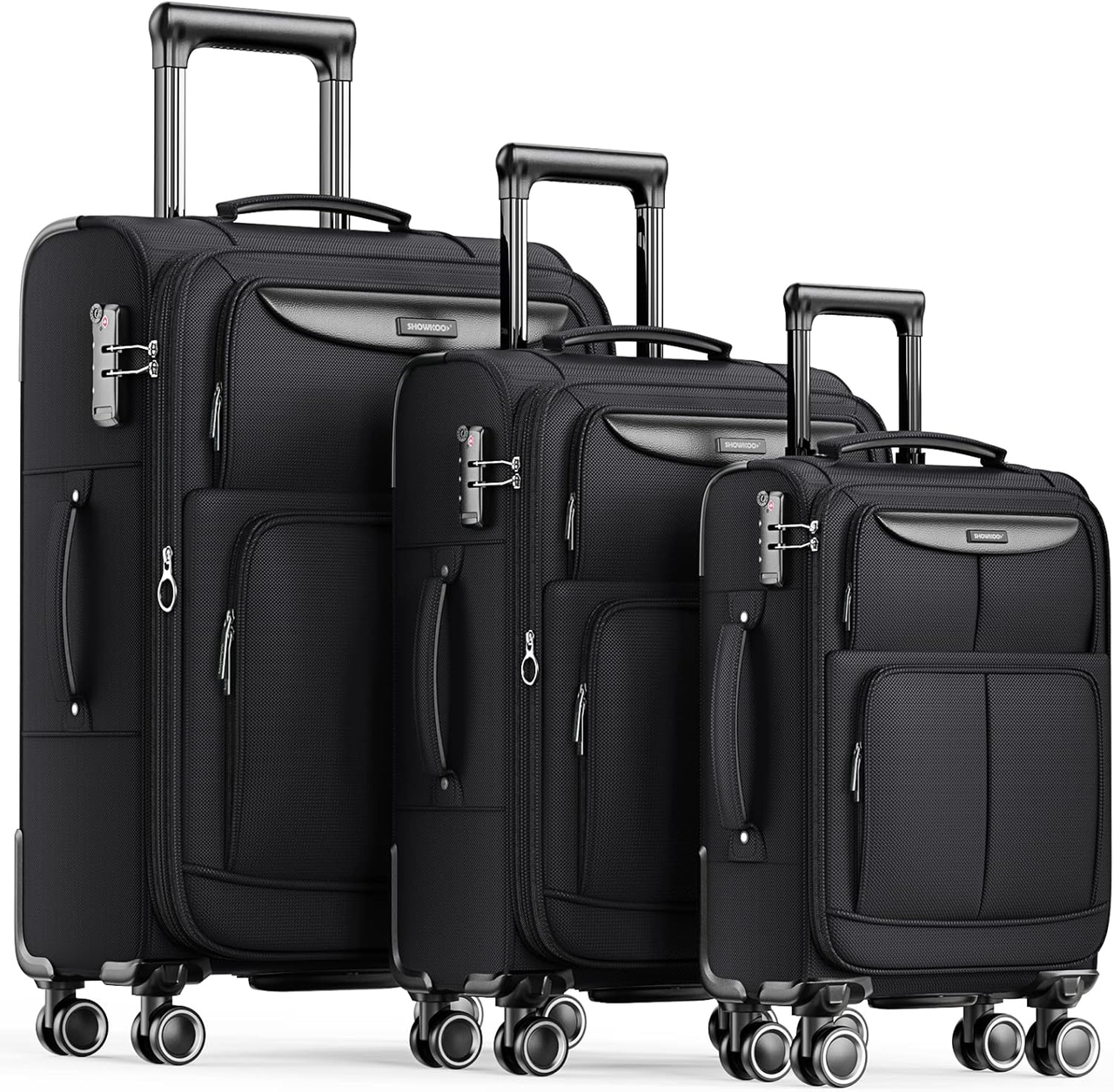
Curated for all travel scenarios—business trips, family vacations, weekend getaways and international journeys—discover the 2026 top 10 luggage sets. We break down key specs, core features and suitable travel needs for hassle-free packing, no damage worries, no noise disturbance and no space waste.